



















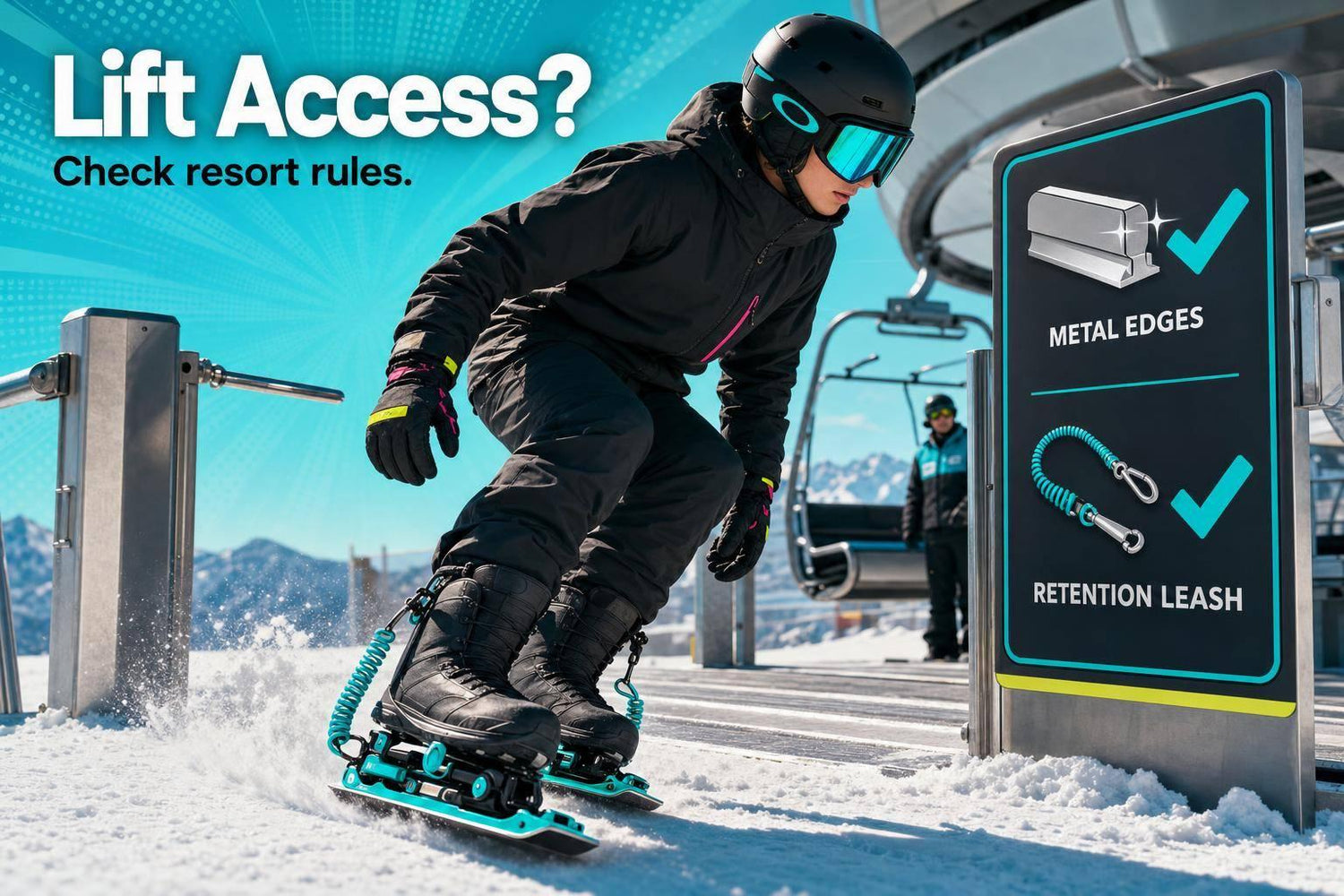
Yes - skiblades are often allowed on chairlifts in the U.S., but the resort makes the call. If your gear has metal edges, secure bindings, and a retention device like brakes or a leash, your odds are much better.
Here’s the plain-English version:
- Resort policy comes first. One mountain may allow skiblades. Another may stop them at the lift.
- Lift staff can still say no. Even if the gear is allowed on paper, you may get turned away if loading or unloading looks shaky.
- Longer skiblades usually get less pushback. In this article, 120 cm is the safest bet for lift access, then 99 cm, then 65 cm. 44 cm skiskates tend to get the most questions.
- Not every lift follows the same rule. A fixed-grip chair may be fine, while a high-speed chair or chondola may have tighter limits.
- Your best move is to ask before you go. Call the resort, name the gear type and length, and get an email if the answer matters for your trip.
If I had to boil the whole thing down to one line, it’d be this: the more your setup looks and works like a regular ski, the easier chairlift access tends to be.
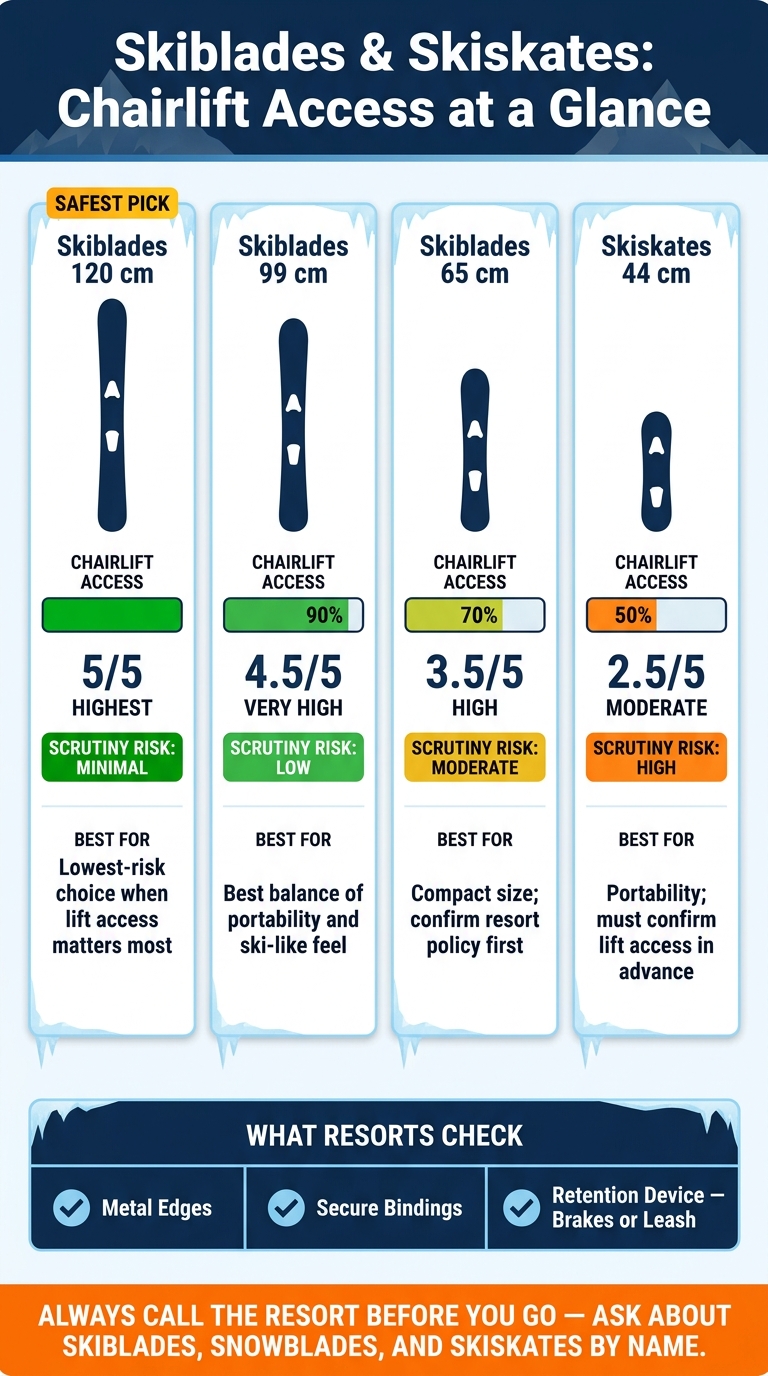
Skiblades & Skiskates Chairlift Access Guide by Model
Snowfeet* Snowblades | Skiboards | Skiblades | Short Skis - Complete Guide | All you need to know
Quick comparison
| Gear | Usual lift access | Chance of being questioned | Best if you want |
|---|---|---|---|
| Skiblades 120 cm | High | Low | The safest pick for resort days |
| Skiblades 99 cm | High | Low to medium | A small setup that still looks ski-like |
| Skiblades 65 cm | Medium | Medium | More compact gear, with a policy check first |
| Skiskates 44 cm | Low to medium | High | Portability, if the resort says yes |
A few facts stand out from the article:
- 3 gear checks show up again and again: edges, bindings, and retention.
- 4 lift types can have different rules: fixed-grip chair, high-speed chair, gondola/chondola, and carpet/tow.
- In one example, Sunday River allows snowskates only in Chondola cabins, not as a blanket lift pass.
- In another, Angel Fire names Snowfeet gear in its written policy, which makes life a lot easier.
So, if you want the short answer without the parking-lot drama: check the resort site, call guest services, and bring written proof if the answer isn’t crystal clear :)
What Resorts Usually Check Before Letting You on the Lift
Metal edges, bindings, and retention devices
Once a resort says short skis are allowed, the next step is the gear check. In most cases, staff look for three things: metal edges, secure bindings, and a retention device.
A lot of resorts allow short skis if they have metal edges and some way to stop the gear from sliding away, but some still ban snowskates outright. That retention piece matters a lot. It can be brakes or a leash. The goal is simple: no runaway gear flying down the hill.
Snowfeet* Skiblades 99 cm and 120 cm use standard release bindings. Shorter models under 100 cm use non-release bindings with safety leashes instead.
Whether you can load, ride, and unload safely
Even if your setup checks all the boxes, lift operators also pay close attention to how you handle the chair. They look at whether you can load without wobbling, stay centered in the seat, manage the safety bar, and unload without a yard sale at the top.
Short gear often gets a second look, most of all when the rider seems new to it. If you look shaky in the loading zone or your feet are swinging on the ride up, staff may stop you, even if your gear is allowed on paper. The safe move is pretty simple: load with purpose and keep your tips pointed forward.
Different rules for different lifts and terrain zones
Here’s the part that trips people up: a resort saying yes to skiblades does not mean every lift says yes too.
Some high-speed detachable lifts are stricter because the loading window is tighter and there’s less room for error. Gondolas can be mixed as well. Short gear is often fine inside the cabin, but the chair section of a chondola may follow a different rule. Beginner areas and magic carpets can also be more strict with non-standard gear.
Use this as a quick gut check before you get in line:
| Lift Type | Typical Stance on Skiblades/Skiskates |
|---|---|
| Standard fixed-grip chairlift | Usually the easiest chairlift type for short gear |
| High-speed detachable chairlift | May restrict unusual gear because loading windows are tighter |
| Gondola / chondola cabin section | Often allowed inside the cabin; the chair section may differ |
| Rope tow / magic carpet | Varies; beginner zones may apply stricter rules |
sbb-itb-17ade95
Which Snowfeet* Models Are Most Likely to Pass Lift Checks
Snowfeet* Skiblades 65 cm vs. 99 cm vs. 120 cm
When it comes to lift checks, the more a Snowfeet* model looks like a normal ski, the easier things tend to go. That’s the simple rule of thumb. With that in mind, here’s how these models compare for chairlift access.
Snowfeet* Skiblades 120 cm are usually the most chairlift-friendly Snowfeet* option because they look the closest to standard skis and tend to draw the fewest questions.
Snowfeet* Skiblades 99 cm sit in the sweet spot. They’re still compact, but they look familiar enough to work well at many resorts.
Snowfeet* Skiblades 65 cm are small, playful, and a blast to ride, but that shorter length can get more attention at stricter resorts. Plenty of places that allow short skis may still let them through, though it’s smart to check before you show up.
Why Snowfeet* Skiskates 44 cm May Get Extra Scrutiny
Snowfeet* Skiskates 44 cm win on portability. No contest there. But they’re also the least ski-like, which makes them the most likely to get stopped or questioned at the lift. At 44 cm, they may not be seen right away as standard ski gear, and some resort rules may not clearly mention skate-style snow equipment. If lift access is a must for your trip, get approval before you arrive.
Comparison Table: Which Option Is Easiest for Lift Access
Here’s the quick version.
| Model | Lift Access | Likelihood of Scrutiny | Best Use Case |
|---|---|---|---|
| Snowfeet* Skiblades 120 cm | Highest | Minimal | Maximum resort compliance; best default pick |
| Snowfeet* Skiblades 99 cm | High | Low | All-mountain riding with fewer policy hurdles |
| Snowfeet* Skiblades 65 cm | Moderate | Moderate | Playful riding; confirm policy at stricter resorts |
| Snowfeet* Skiskates 44 cm | Lower | High | Experienced riders; confirm in advance |
Standard skis are still the least controversial choice overall. Among Snowfeet* models, 120 cm leads for lift access, with 99 cm close behind. Before you pack, check the resort’s policy for skiblades, snowblades, and skiskates by name.
How to Confirm Lift Access Before You Arrive
Check the resort's official policy online first
Start with the resort’s own policy page. Then, if the wording feels fuzzy, call and ask for a written answer.
Look for pages called Equipment Policy, Mountain Safety, Ski & Snowboard Policies, Mountain Policies, Responsibility Code, Uphill Policy, Terrain Park Rules, or Guest Services. You’ll usually find them under Plan Your Trip, Mountain Info, or Safety.
As you read, scan for terms like short skis, snowblades, ski blades, mini skis, novelty devices, or non-standard equipment. If the site doesn’t name them, check for baseline safety rules like metal edges and an approved retention device. That tells you what your Snowfeet* gear needs to have in plain terms.
Angel Fire is a good example. Its written policy names Snowfeet and says they’re allowed as long as they have metal edges and a retention device.
Ask about skiblades, short skis, snowblades, and skiskates by name
If the website doesn’t spell it out, call Guest Services, Ski Patrol, or Lift Operations. Those teams are your best bet for a straight answer.
When you call, have the details ready:
- The exact product name
- The length in centimeters
- Whether it has full metal edges
- The binding type
- Whether it uses a leash or other retention device
Use the product name and the common labels in the same chat: skiblades, snowblades, short skis, and Skiskates. Resorts don’t always use the same terms, and that small mismatch can cause a big headache at the lift.
Also ask whether the rule covers all lifts. And confirm whether metal edges plus a retention device are enough. Sunday River, for example, allows snowskates with a runaway-prevention device, but only on the Chondola and only when loading into cabins.
If the staff still can’t give you a clear answer for your exact model and lift type, ask for email confirmation.
What to do if the answer is unclear
A fuzzy answer isn’t enough to bet a trip on. If you’ve already paid for lodging, a multi-day pass, or travel, don’t just shrug and hope for the best.
Push a bit, politely. You can say:
"Can you confirm by email whether Snowfeet* Skiblades 120 cm are allowed on all your chairlifts?"
Then note the date, the department, and the staff member’s name. Save the reply and bring it with you. It’s one of those small steps that can save you a parking-lot meltdown later :)
Bottom Line: Choosing the Most Chairlift-Friendly Short Ski
Using the lift rules above, the practical ranking is pretty simple.
When Snowfeet* Skiblades 120 cm are the most chairlift-friendly pick
If lift access is your top goal, go with the option that looks and works the most like a regular ski. Snowfeet* Skiblades 120 cm are the most chairlift-friendly pick in the Snowfeet* lineup. They look the closest to standard skis, use standard release bindings, and are the least likely to lead to questions from lift staff.
When shorter Snowfeet* models still make sense
If portability matters more than certainty, 99 cm is your best backup. 65 cm can still work, but you’ll want to check the resort policy first. 44 cm is the one that needs clear resort approval before you head out.
Key points to remember
Chairlift access is never the same everywhere. It depends on the resort, the lift, and whether your gear meets the operator’s retention and safety rules. So, the general pecking order is 120 cm first, then 99 cm, then 65 cm, with 44 cm as the most situation-dependent pick.
| Model | Length | Chairlift access | Best use |
|---|---|---|---|
| Skiblades | 120 cm | Highest | Lowest-risk choice when lift access matters most |
| Skiblades | 99 cm | Very High | Best balance of portability and ski-like feel at resorts that allow short skis |
| Skiblades | 65 cm | High | Best when compact size matters and policy is confirmed |
| Skiskates | 44 cm | Moderate | Only when lift access has been confirmed in advance |
FAQs
Can lift access change by chairlift type?
Yes. Lift access can vary based on the chairlift and the resort’s own rules.
Most resorts look at safety first. In many cases, staff check for features like metal edges so the gear works in a known, predictable way on the mountain.
Snowfeet products are compact, which can make them easier to load and unload than long skis. That said, it’s still smart to check with the resort before you go. A quick call can save you a hassle at the lift :)
What gear features matter most for approval?
The biggest factor is quality metal ski edges. That’s the part many resorts care about most. They often want skiblades built to a standard that works safely on groomed runs, much like regular skis.
For longer gear, release bindings are often required once you go over 100 cm. Shorter blades can use non-release or snowboard-style bindings, but safety leashes are strongly recommended if there’s no release system. Snowfeet* models come with metal edges and tough construction, which may help them get approved more often than flimsier options.
How do I confirm my Snowfeet* model is allowed?
Check that your Snowfeet* meets your destination resort’s standard safety rules. Most resorts allow short skis with metal edges, so Snowfeet* products are often accepted the same way as regular skis.
If a staff member asks, explain that your Snowfeet* has metal edges and a standard safety-focused build. For models over 100 cm, use release ski bindings. For longer blades with non-release bindings, consider safety leashes.











اترك تعليقًا
This site is protected by hCaptcha and the hCaptcha Privacy Policy and Terms of Service apply.