



















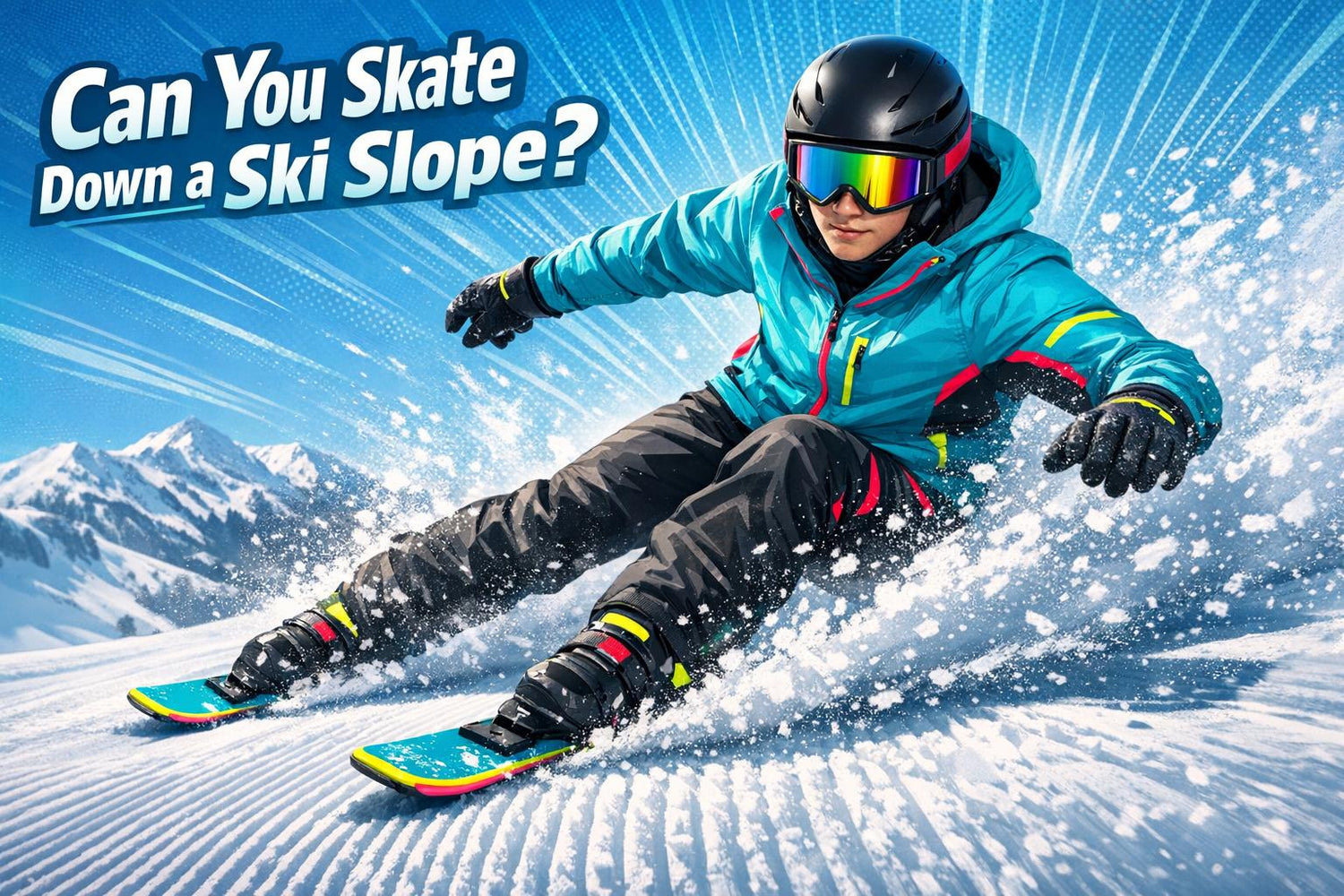
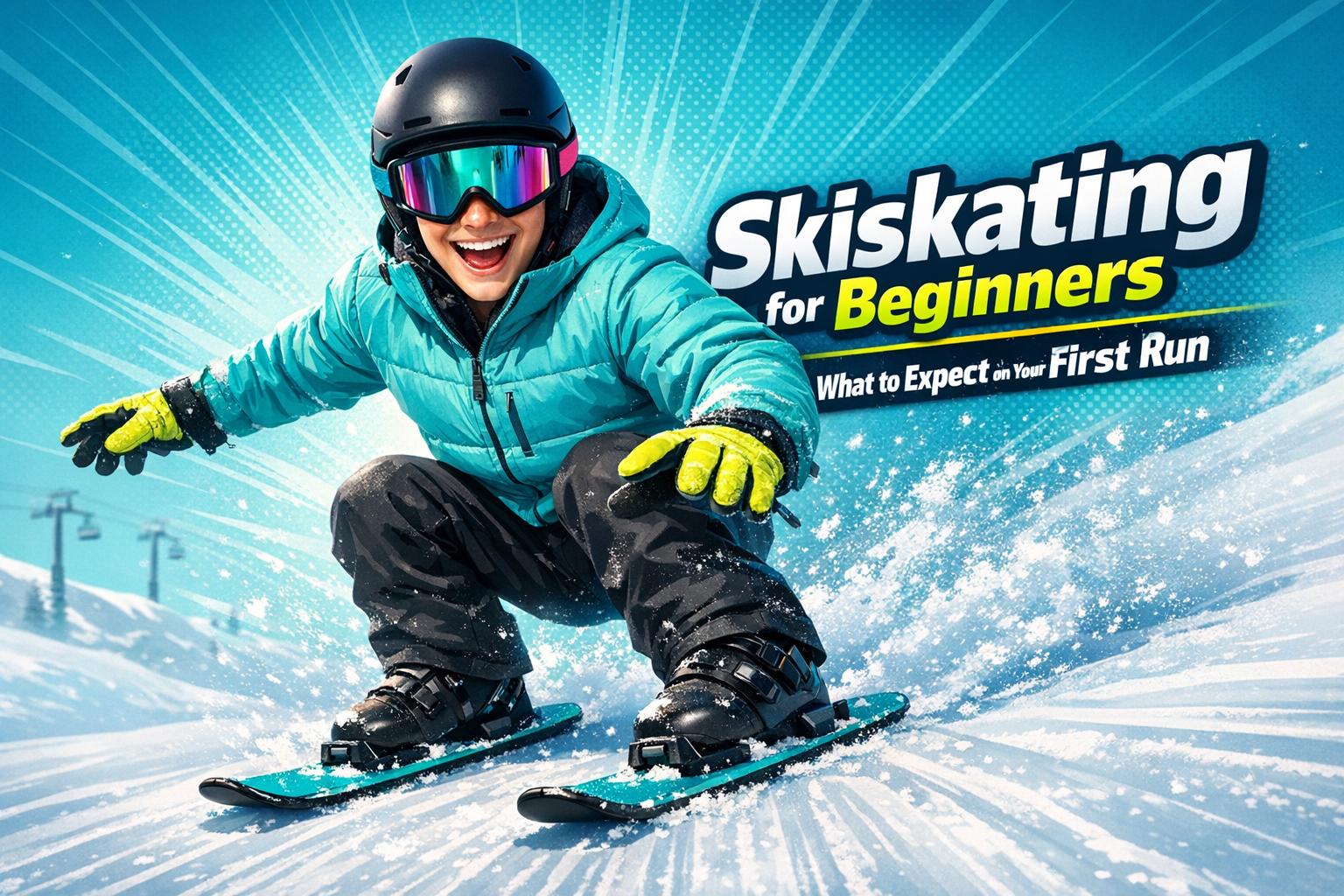
Yes, you can! With Snowfeet Skiskates or mini skis, you can glide down groomed ski slopes using movements similar to ice or inline skating. These compact, lightweight alternatives to skis (15–17 inches long) make it easy to turn, stop, and carry your gear. They’re great for beginners, skaters, or anyone looking to try something new on the slopes.
Why Snowfeet Skates Work:
- Short Length: Easier to control and turn than standard skis.
- Easy to Carry: Fits in a backpack - no bulky gear required.
- Quick to Learn: Feels natural for anyone with skating experience.
- Compatible with Winter Boots: No need for specialized ski boots.
These skates perform best on groomed, packed snow but struggle in deep powder or icy conditions. They’re ideal for casual riders or those who want a fun, low-hassle way to enjoy the slopes. Whether you're carving turns or cruising down a green run, Snowfeet offers a fresh way to experience winter sports.
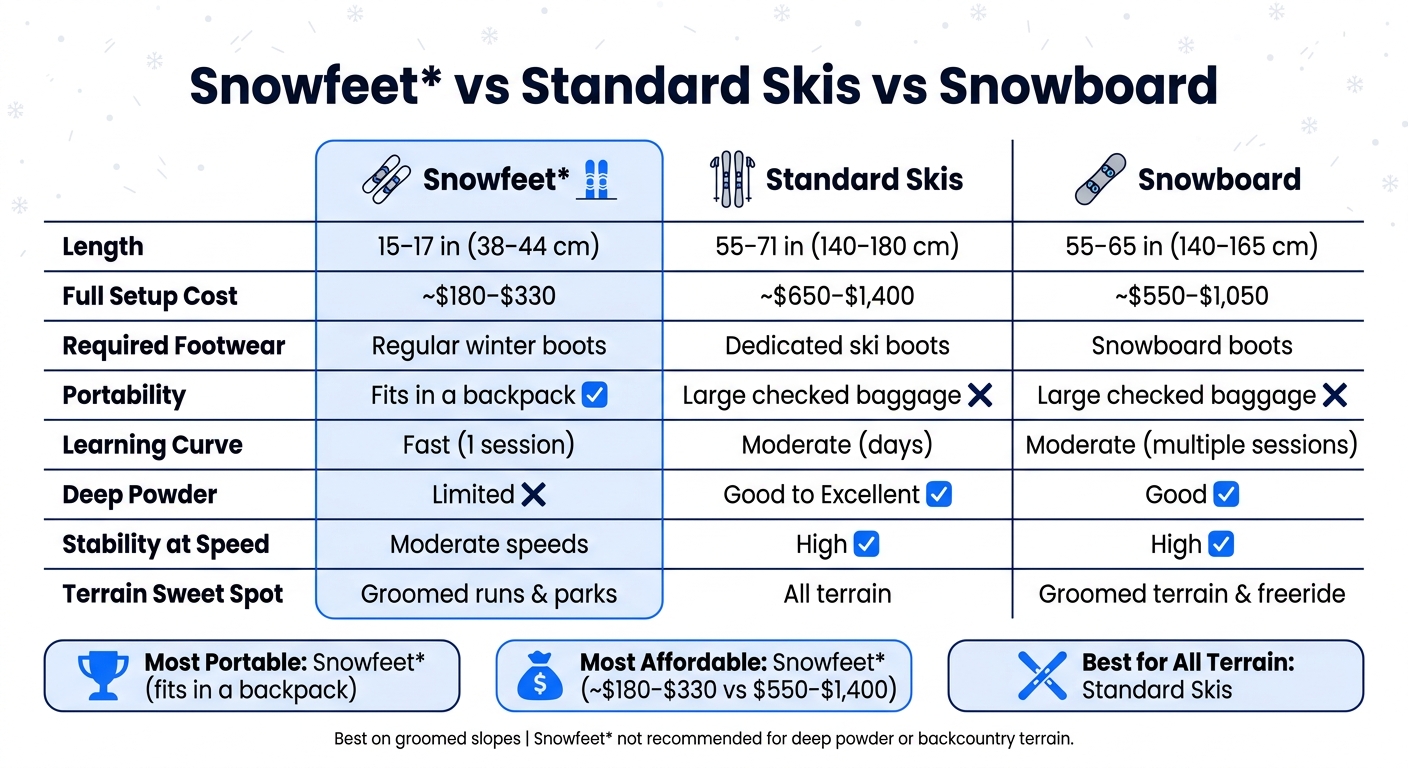
Snowfeet vs Skis vs Snowboard: Full Gear Comparison
What Does Skating Down a Ski Slope Actually Mean?
Understanding the Skating Motion on Snow
Skating down a ski slope involves a side-to-side movement, much like ice skating or inline skating, instead of simply gliding downhill with gravity.
"Imagine ice skates, but for skiing slopes. They are the shortest skis in the world which combine skiing and skating." - Snowfeet Store
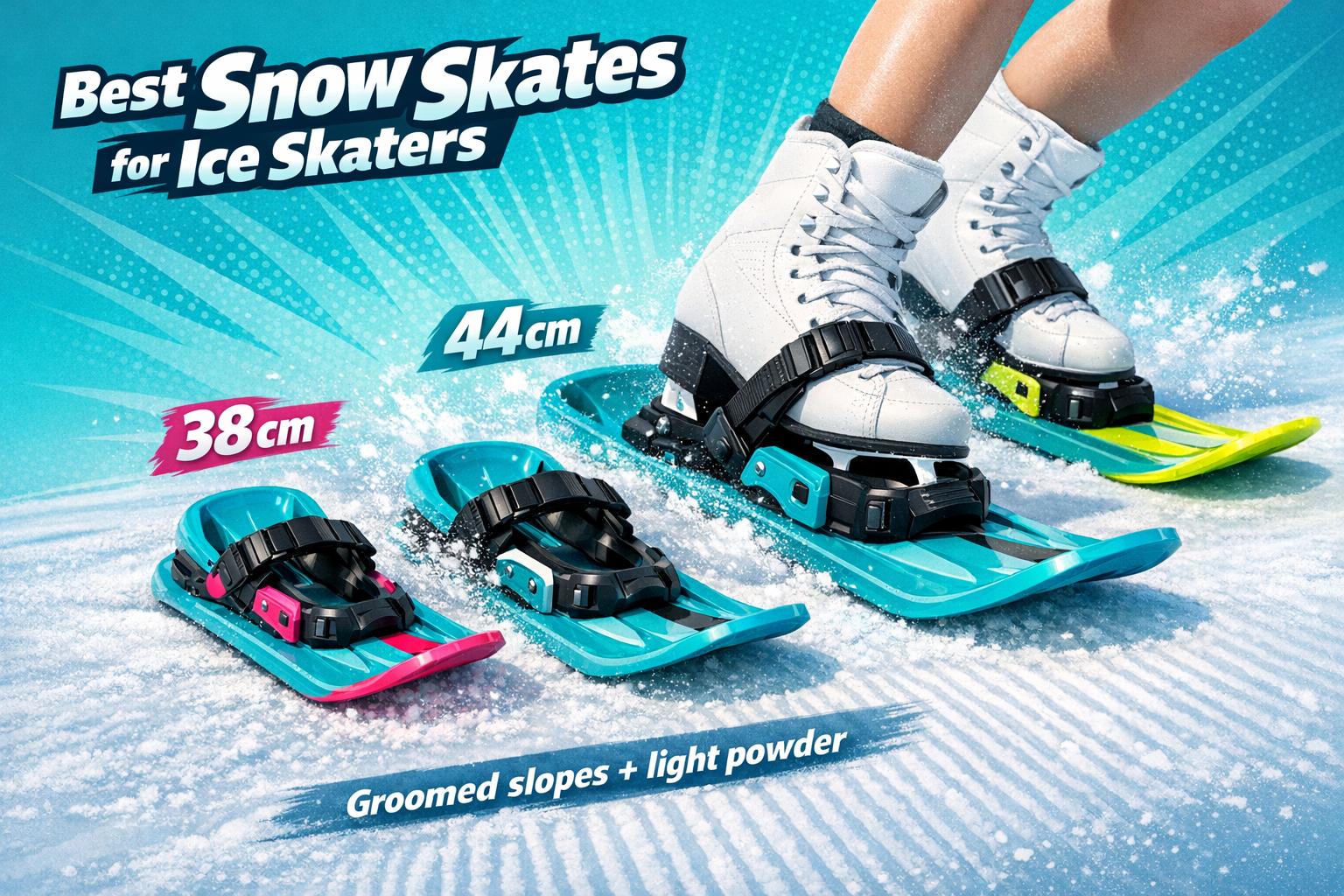
With Snowfeet* Skiskates (measuring 44 cm, or about 17 inches) and mini skis (38 cm, or about 15 inches), you use each foot to push, glide, and shift weight independently. This allows for smooth, controlled movements like spinning, riding backward, and making sharp turns - all without worrying about crossing your ski tips, a common issue with longer skis (typically 150–180 cm). The technique works best on certain snow conditions, where precision and agility shine.
Ideal Conditions for Skating Gear
Snowfeet* gear thrives on groomed and packed snow, making it perfect for ski resorts. It's also great for snow parks, sledding hills, and narrow trails where traditional long skis can feel cumbersome.
However, powder snow deeper than 4 inches (10 cm) can reduce performance. For beginners, starting on gentle, groomed slopes is key to developing balance and confidence.
Why Snowfeet* Outperforms Standard Skis and Snowboards
Better Control and Quicker Turns
One of the standout features of Snowfeet* is their compact size, which gives them a major edge over traditional skis. Their shorter length allows for tight turns and quick, ice skate–like movements. This means you can make faster edge-to-edge transitions, execute sharp hockey stops, and navigate around obstacles with ease - especially on crowded green or blue runs. Unlike the sweeping arcs required by longer skis or snowboards, Snowfeet* offer a level of agility that feels intuitive, making every turn feel precise and natural.
Easy to Carry and Store
Let’s face it - lugging around full-size skis or snowboards can be a hassle. They require roof racks, oversized bags, and a lot of storage space. Snowfeet*? They fit in a standard backpack.
"Also a big plus - they're lightweight and much easier to carry around than full-size skis." - Brad Tolin
For riders in the U.S., this means no more paying oversized baggage fees when flying, no need for a roof rack, and no struggling to store bulky gear in a small apartment or car. Traditional ski setups with bindings can weigh anywhere from 10 to 15 pounds, while snowboard setups often tip the scales at 12 to 18 pounds. Snowfeet* weigh just a fraction of that, making spontaneous trips to the slopes a breeze.
Easy to Learn for New Riders
If the learning curve of skiing or snowboarding has ever intimidated you, Snowfeet* might be the perfect solution. They strip away the need for the complex techniques required by traditional skis and boards. For beginners, especially those with skating experience, Snowfeet* feel natural and can be mastered in just one session.
While skiing often takes days to grasp and snowboarding requires multiple sessions to confidently link turns, Snowfeet* simplify the process. Their upright stance and skating-like movements make them an easy transition for anyone familiar with ice skating or rollerblading. Add in their portability, and Snowfeet* make winter sports feel accessible and uncomplicated.
Works with Regular Winter Shoes
Another game-changing feature? Snowfeet* work with your everyday waterproof winter boots. Adjustable bindings let you strap them on without needing specialized footwear. For those who prefer extra ankle support on steeper slopes, some models are compatible with snowboard boots as well. This eliminates the need for pricey ski boots or rentals while keeping you comfortable and ready to walk naturally when you're off the slopes. Practical, simple, and cost-effective - what’s not to love?
Choosing the Right Snowfeet* Model
Snowfeet* Product Overview
Snowfeet* has three main models tailored for different riders. First up, the Snowfeet Mini Ski Skates (38 cm). These are the smallest option, designed for kids with US shoe sizes under 6, starting at $250. They’re perfect for younger riders learning to balance and gain confidence on the slopes.
Next, there’s the Skiskates (44 cm), priced at $575. This is Snowfeet*’s flagship model, handmade in Europe with a wood core, steel edges, and a sintered graphite base - crafted using traditional ski techniques. These are ideal for carving, snow park tricks, and having a blast on groomed runs. As Zbyněk, the brand’s founder, puts it:
"In my opinion, Skiskates is the best product for slopes we developed so far. I love how easy they are to ski and skate and how many different kinds of tricks I can perform without much effort and almost no restrictions."
Finally, the Snowfeet PRO (50 cm), starting at $275, features a fiberglass flex core instead of wood. It’s slightly longer, adding stability and offering a middle ground between the compact Skiskates and a traditional ski setup.
Think about your riding style and experience when picking a model. The right choice will depend on your skill level and how much stability you’re looking for.
Which Model Fits Your Skill Level?
Here’s a quick breakdown: shorter skis are more agile but require better balance, especially at higher speeds.
| Model | Length | Best For | Boot Compatibility | Starting Price |
|---|---|---|---|---|
| Snowfeet Mini | 38 cm | Kids (shoe size < 6 US) | Winter boots | $250 |
| Snowfeet PRO | 50 cm | Beginners & intermediate riders | Ski or snowboard boots | $275 |
| Skiskates | 44 cm | Intermediate to experienced riders | Ski or snowboard boots | $575 |
If you’re just starting out, the Snowfeet PRO provides extra stability. On the other hand, seasoned skaters might enjoy the nimble Skiskates. Many riders with skating experience find they can get the hang of these in just 5 minutes. And if you’re looking to carve harder, hit the park, or fully embrace that skate-on-snow vibe, the Skiskates are a solid upgrade, earning a 5.0/5 rating from 123 reviews.
One thing to note: the Skiskates require ski or snowboard boots, while the Snowfeet PRO works with both types of boots. Choose what fits your needs best and get ready to hit the slopes!
Skating down a Skiing Slope | Switzerland Part 4
sbb-itb-17ade95
How to Skate Down a Ski Slope Safely
Once you've chosen your Snowfeet* model, the next step is all about practicing safely and building confidence on the slopes. While Snowfeet* are relatively easy to pick up, preparation and control are crucial.
Start on Gentle, Groomed Slopes
The best place to begin is on a green circle slope with a mild pitch of 8–15° and smooth, corduroy-groomed snow. These conditions help you find your balance without too much risk. Avoid crowded areas like lift lines or unloading zones, and look for open spaces with a clear runout - this will give you plenty of room to stop safely.
Basic Techniques to Know
Getting the hang of Snowfeet* starts with perfecting your stance and weight distribution. Keep your knees slightly bent, your hips centered over your feet, and your upper body facing downhill. Think of it like a relaxed, athletic squat instead of standing stiff and upright. Make sure your weight stays over the balls of your feet - leaning back onto your heels can reduce your edge grip and make control harder.
To manage your speed, focus on turning across the hill rather than heading straight down. Shift your weight to one foot, engage the edges of your skates, and carve smooth S-turns. The goal is to finish each turn almost perpendicular to the slope’s fall line, which naturally slows you down. If you're just starting, try short stop-and-go runs on gentle slopes to build your control and confidence.
Before hitting the slope, double-check that all straps, buckles, and boot supports are secure. Safety gear is a must - wear a snow-sports helmet certified to ASTM F2040 or CE EN1077 standards, and consider wrist guards to protect yourself from forward falls.
Make sure you’ve got these basics down before moving on to steeper or more challenging terrain.
Common Risks to Avoid
Even with the right preparation, there are a few risks to keep in mind. Snowfeet* work best on packed, groomed snow. Conditions like deep powder, moguls, icy patches, or off-piste terrain can make balancing tricky and stopping less reliable. These challenges can turn the compact design of Snowfeet* into a disadvantage.
Also, stay mindful of other people on the slope. Quick direction changes with Snowfeet* can surprise nearby skiers, so it’s important to follow safety guidelines like the NSAA's "Your Responsibility Code." This means staying in control, keeping your speed predictable, and yielding when necessary. If the slope gets crowded, slow down and give others plenty of space to avoid accidents.
Best Terrain and Conditions for Snowfeet*
Ideal Conditions for Snowfeet*
Snowfeet* thrive on groomed resort runs, terrain parks, and firm, packed snow. They perform exceptionally well on freshly groomed corduroy, particularly in the morning when the snow is still firm. On these surfaces, their compact design provides excellent grip, sharp turning ability, and dependable stopping power. Green and blue runs are ideal, offering the smooth and consistent terrain that complements Snowfeet*'s design.
Terrain parks are another sweet spot for Snowfeet*. Their short length makes them nimble for navigating boxes, rails, and small-to-medium jumps. With good balance and edge control, they’re great for quick direction changes and playful park laps. That said, it’s important to match the features to your skill level and approach them as a fun tool rather than a full-on freestyle setup.
For the best experience, stick to cooler mornings when the snow is firm. Warmer afternoons can soften the snow, making conditions less than ideal. Also, busier runs later in the day may not be the best choice for these compact skis.
Where Snowfeet* Has Limits
Snowfeet* do have their limitations. They struggle in deep powder, backcountry terrain, and heavily chopped-up snow. Their short contact length means less surface area to float on soft snow, leading to tip diving, quicker fatigue, and reduced control.
Here’s a quick breakdown of how Snowfeet* handle different conditions:
| Terrain / Condition | Snowfeet* Performance | Suitability |
|---|---|---|
| Groomed green/blue runs | Easy turns, great control, beginner-friendly | ✅ Ideal |
| Terrain parks (small/medium features) | Agile, playful, great for quick direction changes | ✅ Ideal |
| Firm packed/corduroy snow | Predictable edge grip and stopping | ✅ Ideal |
| Groomed steeper runs (blue/black) | Very agile but less stable at speed; for experienced riders | ⚠️ With experience |
| Icy or boilerplate surfaces | Reduced edge hold; demands strong technique | ⚠️ Use with caution |
| Deep powder | Poor float, tiring, harder to control | ❌ Not recommended |
| Backcountry / off-piste | Variable snow, hidden hazards; not designed for this | ❌ Not recommended |
If you’re riding in the Pacific Northwest, you’ll want to be extra cautious. The region’s heavy, wet snow - often referred to as "Cascade concrete" - can make even groomed runs challenging. Stick to freshly groomed main trails and avoid ungroomed bowls or tree runs after a storm.
Lastly, always verify that your resort allows Snowfeet*-style gear on their lifts and trails. Policies can vary, and a quick call or a look at the resort’s website can save you from any surprises before buying your lift ticket.
Understanding these terrain strengths and weaknesses will help you make a more informed comparison between Snowfeet* and traditional ski or snowboard gear in the next section.
Snowfeet* vs Standard Ski and Snowboard Gear
Key Advantages of Snowfeet*
Snowfeet* bring a fresh twist to winter sports gear, focusing on portability, simplicity, and affordability. Let’s break down how they stack up against traditional skis and snowboards.
Standard adult skis are typically 55–71 inches (140–180 cm) long, and snowboards come in at 55–65 inches (140–165 cm). Compare that to Snowfeet* Skiskates, which are just 17 inches (44 cm), or the boot-attachable Snowfeet* model at 15 inches (38 cm). That’s a massive difference in size! Thanks to their compact design and compatibility with regular winter boots, you can toss Snowfeet* into a backpack and easily switch between the slopes and the streets.
These compact dimensions also make Snowfeet* easier to use. For beginners, the movement feels more like skating or walking, which means you can pick up the basics - like turning and stopping - within a single session on a groomed slope. Compare that to traditional skiing or snowboarding, where you’ve got to master balancing, edge control, and handling long gear on lifts. It’s a much steeper learning curve.
That said, Snowfeet* do have their limits. They’re fantastic for quick, agile runs on groomed slopes, but traditional skis and snowboards shine when it comes to high-speed stability, deep powder, and steep or icy terrain. Skis and snowboards, with their larger surface area, provide better grip and float in challenging conditions. So, while Snowfeet* are a fun and versatile option, they’re not designed to replace your big-mountain gear.
Comparison Table: Snowfeet* vs Standard Gear
| Feature | Snowfeet* (38–44 cm) | Standard Skis (140–180 cm) | Snowboard (140–165 cm) |
|---|---|---|---|
| Length | 15–17 in (38–44 cm) | 55–71 in (140–180 cm) | 55–65 in (140–165 cm) |
| Weight & Bulk | Light; fits in a backpack | Heavier; requires a ski bag/roof rack | Heavier; requires a board bag |
| Required Footwear | Regular winter boots or snowboard boots | Dedicated ski boots + bindings | Snowboard boots + bindings |
| Maneuverability | Extremely quick with a tight turning radius | Stable; enables longer, wider turns | Stable carving with wider arcs |
| Stability at Speed | Best at moderate speeds | High at medium–high speeds | High at medium–high speeds |
| Learning Curve (Basics) | Fast, especially for skaters | Moderate; more technique required | Moderate; early falls are common |
| Deep Powder Performance | Limited float | Good to excellent | Good with wider boards |
| Portability / Travel | Carry-on friendly | Requires large checked baggage | Requires large checked baggage |
| Full Setup Cost | ~$180–$330 (uses existing boots) | ~$650–$1,400 (skis + boots + poles) | ~$550–$1,050 (board + boots) |
| Boot Comfort Off-Snow | High (allows natural walking) | Low (rigid ski boots) | Medium (snowboard boots) |
| Terrain Sweet Spot | Groomed runs, parks, moderate slopes | All groomed terrain; off-piste options | Groomed terrain, parks, freeride |
Snowfeet* are also much easier on the wallet. They cost around $180–$330, which is a fraction of the $550–$1,400 price tag for traditional setups. Combine that with their portability and ease of use, and Snowfeet* become an appealing choice for casual riders or anyone curious about snow sports without breaking the bank. It’s clear why they’re gaining popularity for those seeking convenience and agility on the slopes.
Conclusion: Why Snowfeet* Is the Next Step in Winter Fun
Imagine gliding down a ski slope with the control of skating - Snowfeet* makes it possible and easier than ever. Whether you go for the 38 cm (approximately 15 inches) Snowfeet* priced at $250 or the 44 cm (approximately 17 inches) Skiskates starting at $575, you're getting a compact, portable setup that works seamlessly with your regular winter boots. It’s a level of convenience that traditional ski gear just doesn’t offer.
Traditional ski equipment requires careful tuning - getting the stiffness, weight, and skill level just right. When you don’t, it can lead to fatigue and a loss of control. Snowfeet*, on the other hand, strips away all that complexity. The setup is straightforward, and you can start having fun almost immediately. This simplicity makes it perfect for those who find traditional gear intimidating or just want to enjoy the slopes without the hassle.
Of course, Snowfeet* isn’t meant to replace everything. For high-speed runs or deep powder, traditional skis and snowboards are still the go-to. But for groomed slopes, quick outings, or casual riders who want to skip the bulk and expense of traditional gear, Snowfeet* offers a fresh alternative.
In short, Snowfeet* changes the way you experience the mountain. It’s lighter, less expensive, and far simpler than traditional equipment - making the idea of skating on snow not just possible, but downright fun. If you’re ready to shake things up on the slopes, Snowfeet* might just be your next winter adventure.
FAQs
Do ski resorts allow Snowfeet on lifts and runs?
Ski resorts can have varying rules when it comes to using Snowfeet on their lifts and slopes. While Snowfeet are made for fun on the snow, some resorts might limit their use since they’re usually set up for traditional skis and snowboards. To avoid any surprises, it’s a good idea to contact the resort you’re heading to and ask about their specific policies on Snowfeet or other non-traditional gear.
What safety gear should I wear with Snowfeet?
For a safer experience with Snowfeet, make sure to gear up with protective equipment. A helmet, wrist guards, knee pads, and elbow pads are strongly recommended. These essentials can help minimize the chance of injuries, letting you enjoy your time on the slopes with peace of mind. Stay safe and have fun!
How fast can you safely go on Snowfeet?
When snow skating, you can typically hit speeds comparable to ice skating - around 10 to 15 mph. But here's the thing: your safe speed isn't just about the numbers. It depends on a mix of factors like how skilled you are, the type of terrain you're on, and the snow conditions that day. The key? Always stay in control and adjust your pace to match the situation for a safer ride.











اترك تعليقًا
This site is protected by hCaptcha and the hCaptcha Privacy Policy and Terms of Service apply.