



















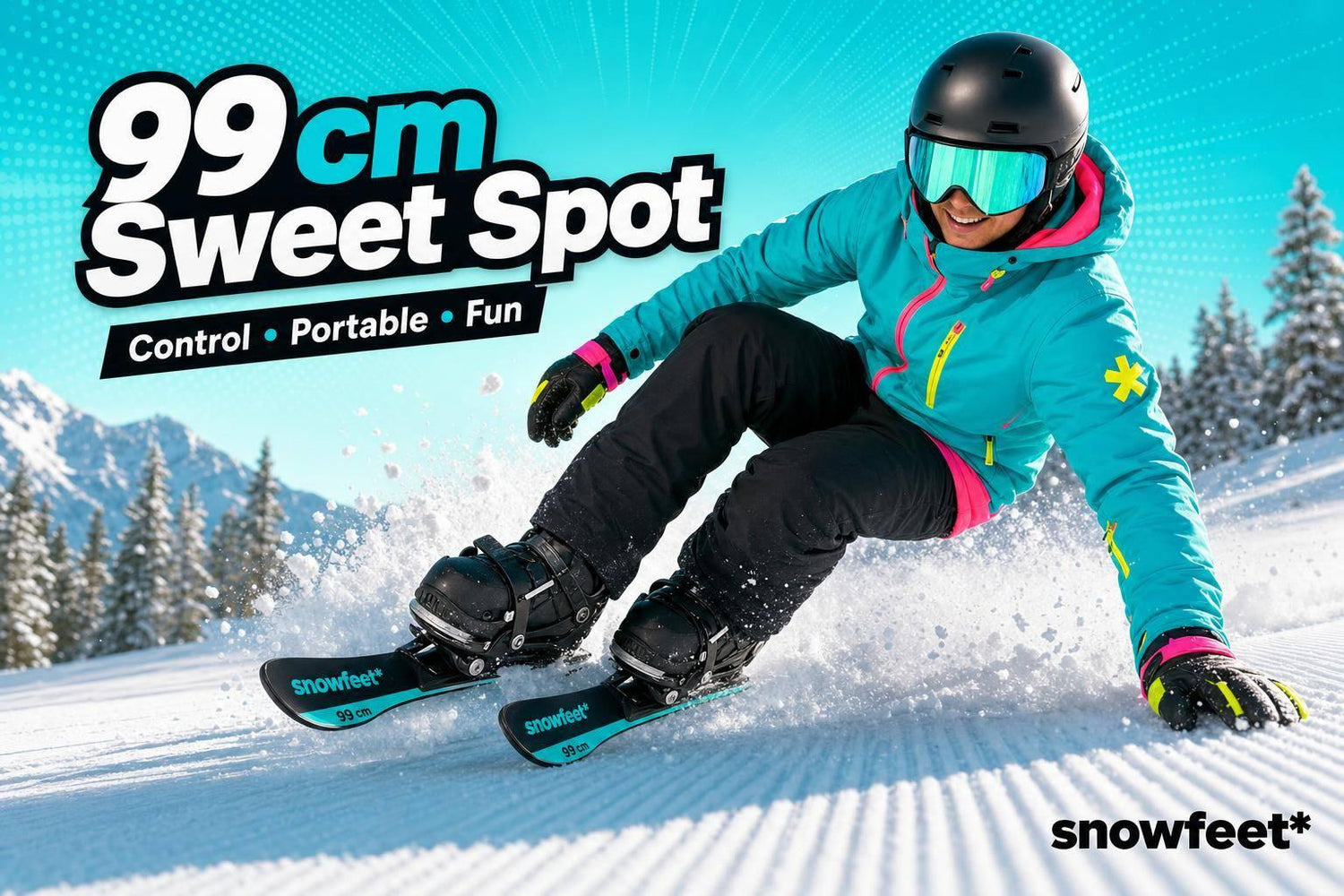
Yes - for most resort riders, I’d put the 99 cm skiblade at the top of the all-around list. It sits in the middle of the short-ski range, and that matters. You get more control than 65 cm skiblades, more easy movement than 120 cm models, and enough support for groomers, chopped snow, park laps, and casual all-day use.
If I had to sum it up fast, here’s the call:
- 65 cm: best for backpack-size carry, spins, and low-speed fun
- 99 cm: best one-pair pick for most riders
- 99 cm POWDER: same length, but better in soft snow
- 120 cm: best if you ski faster and want a calmer ride
The big trade-off is simple: the 99 cm does a lot well, but it’s not the top choice for deep powder, high-speed charging, or long, hard carving like a full ski. For a normal resort day, though? It hits a sweet middle spot.
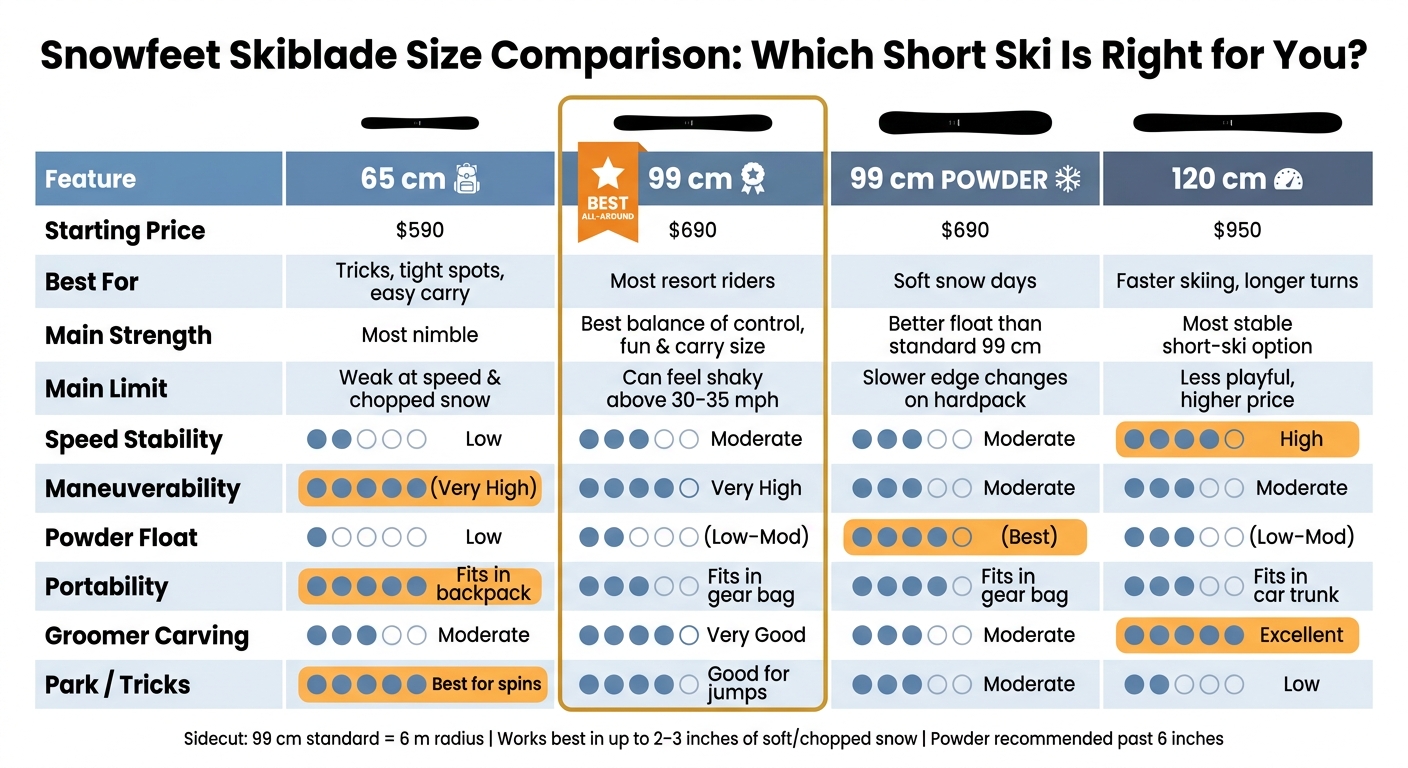
Snowfeet Skiblade Size Comparison: Which Short Ski Is Right for You?
Snowboarder tries Snowfeet* | Which Snowfeet* Short Ski is the Best? | Snowblades 44, 65, 99 Review
Quick Comparison
| Model | Best For | Main Strength | Main Limit | Starting Price |
|---|---|---|---|---|
| 65 cm | Tricks, tight spots, easy carry | Most nimble | Weak at speed and in chopped snow | $590 |
| 99 cm | Most resort riders | Best balance of control, fun, and carry size | Can feel shaky above 30–35 mph | $690 |
| 99 cm POWDER | Soft snow days | Better float than the standard 99 cm | Slower edge changes on hardpack | $690 |
| 120 cm | Faster skiing, longer turns | Most stable short-ski option | Less playful, higher price | $950 |
A few numbers tell the story fast:
- Short skis in this group run from 65 cm to 120 cm
- The standard 99 cm uses a 6 m sidecut
- It works best in up to about 2–3 inches of chopped or soft resort snow
- In powder past 6 inches, longer or powder-built skis start to make more sense
So if you want one short ski for mixed resort days, the 99 cm is the safe bet. It’s the one I’d point most people toward first - then I’d move them shorter or longer based on how they ski :)
Snowfeet* 99 cm Skiblades: The Reference Point
At 99 cm, this Snowfeet* skiblade is the baseline. It feels stable on groomers, quick in tight spots, and easier to handle than 120 cm skiblades or full-length skis. So if you want the cleanest example of what matters most on resort snow, this is it.
It works well for beginners, intermediates, and casual advanced skiers who want one simple setup for most resort days. You get a nice mix of learning ease, all-around use, and portability in one pair.
How 99 cm handles common resort conditions
On groomed runs, the 99 cm length is where this model shines. The 6 m sidecut helps it carve fast, clean turns on groomers. It feels quick without feeling twitchy, which is a sweet spot for a lot of resort skiers.
In mixed afternoon snow - the chopped-up stuff you run into after a busy weekend - it stays under control in 2–3 inches of fresh snow. That matters, because not every day is a bluebird corduroy day :)
A few traits stand out here:
- The twin-tip design makes skiing switch easy and fun
- The low swing weight helps you pop, pivot, and redirect on small hits
- The easy learning curve makes it less intimidating than longer skis
That easygoing feel is one of its biggest selling points. Once you get that, the next step is pretty simple: figure out if a smaller or longer Snowfeet* size fits your style better.
Where 99 cm falls short compared to longer skis
The downsides are pretty clear too. Once you get above 30–35 mph, the 99 cm can start to feel nervous. You may notice chatter that longer skis just smooth out better.
It also has limits in soft snow. In powder deeper than 6 inches, it won’t float like the 120 cm model or a ski built for powder days. And if you like to charge steep, icy terrain at high speed, this isn’t the tool for that job.
Those trade-offs show up most when you stack the 99 cm against the 65 cm, 99 cm POWDER, and 120 cm models.
sbb-itb-17ade95
99 cm vs Other Snowfeet* Lengths: Which Size Fits You?
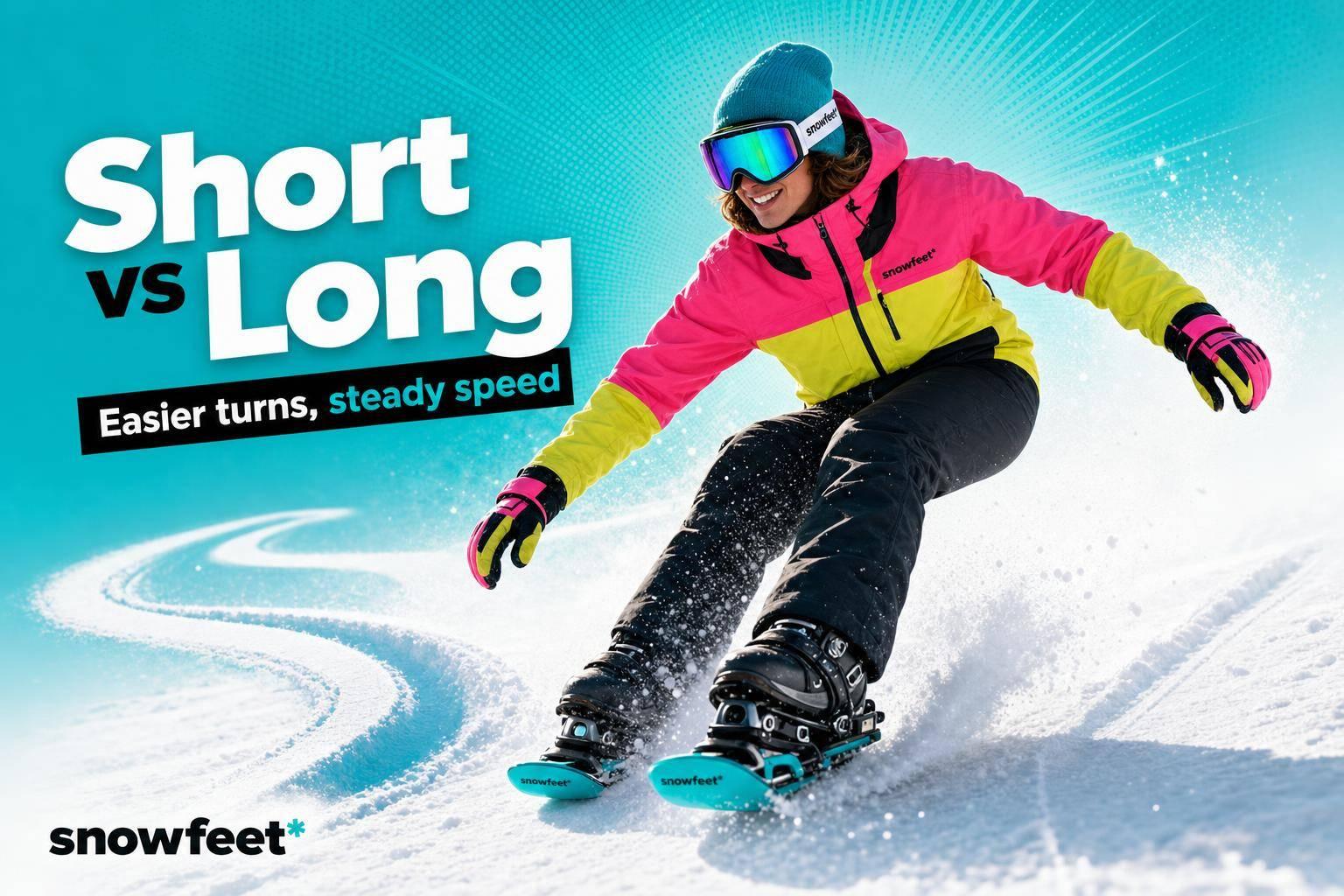
Here’s how the 99 cm stacks up against the other Snowfeet* sizes. The point isn’t whether the 99 cm works. It does. The point is knowing when another size makes more sense.
Snowfeet* 99 cm vs 65 cm
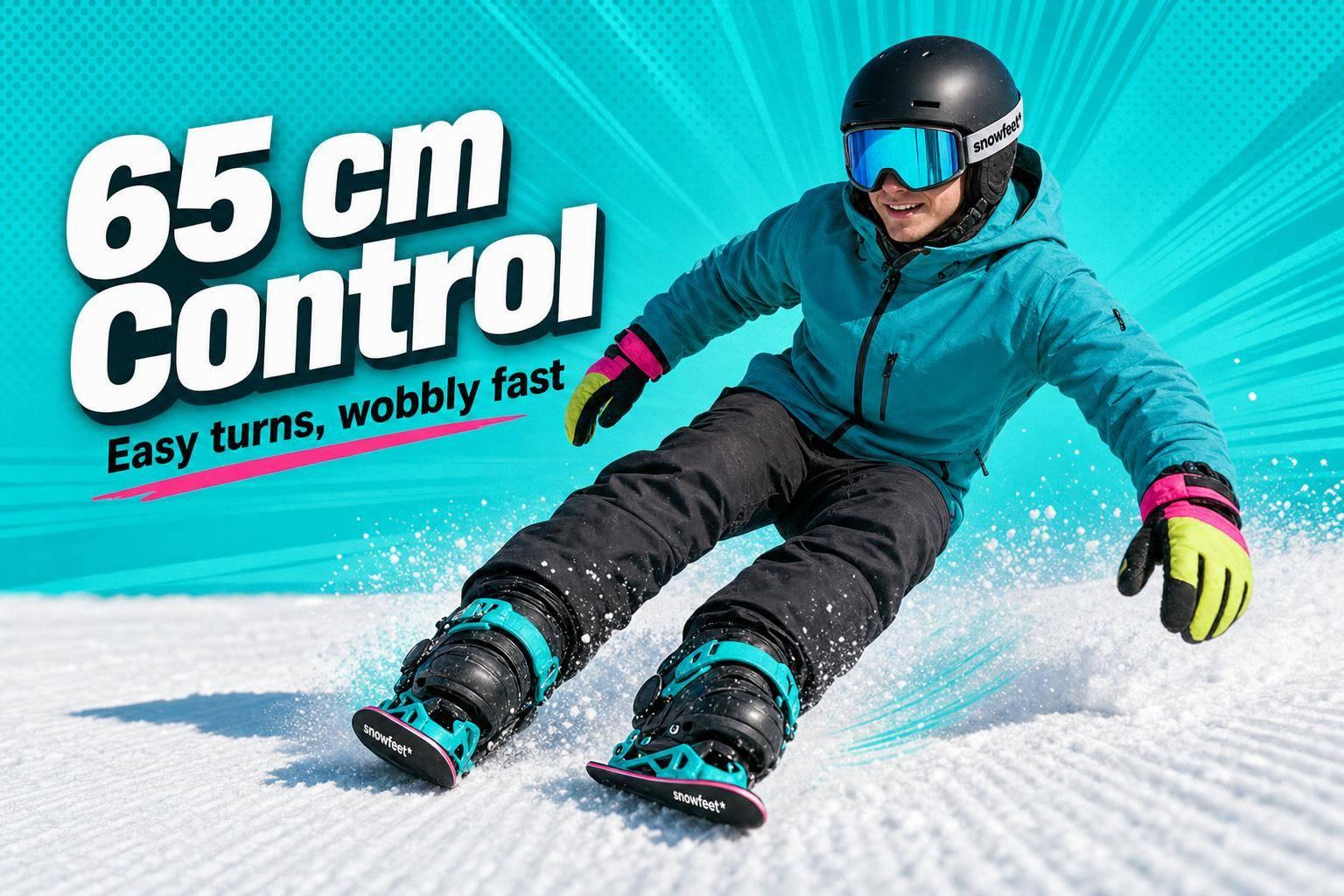
The 65 cm is the most skate-like option. It’s built for quick pivots, spins, and that loose, playful feel. It also fits in a backpack, so it wins on portability by a mile.
The 99 cm gives you more edge contact. That means better grip on firm groomers. It also feels more stable in late-day chopped snow, where the 65 cm can get a bit twitchy. And if you like jumps, the 99 cm gives you steadier landings.
| Feature | Snowfeet* 99 cm | Snowfeet* 65 cm |
|---|---|---|
| Tricks/Park | Better for jumps & landings | Better for flat-ground spins |
| Chopped Snow | Handles well | Difficult; unstable |
| Portability | Fits in most gear bags | Fits in a backpack |
Go with the 65 cm if you want skate-style riding on smooth groomers. Pick the 99 cm if you want more confidence across a broader mix of resort conditions.
And here’s the key thing: if you want more performance in soft snow, width matters more than length.
Snowfeet* 99 cm vs 99 cm POWDER
Same length. Very different job.
The POWDER version has a wider waist, which gives it more surface area. In plain English, that helps it stay on top of soft snow instead of sinking into it.
The standard 99 cm is narrower, so it feels faster edge-to-edge on groomers. If you mostly ride East Coast and Midwest resorts, the standard version is the smarter call. If you spend your winter hunting soft snow days at Western resorts, the 99 cm POWDER starts to make a lot more sense.
| Feature | Snowfeet* 99 cm (Standard) | Snowfeet* 99 cm POWDER |
|---|---|---|
| Best Terrain | Groomers & mixed resort | Soft snow & off-trail |
| Waist Width | Narrower | Wider |
| Float in Soft Snow | Good | Best |
| Edge-to-Edge Speed | Faster on groomers | Slower due to width |
| Best For | East Coast and Midwest resorts | Western resorts |
If your main goal is stability over quick direction changes, the next matchup is the 120 cm.
Snowfeet* 99 cm vs 120 cm
The 120 cm feels the most like a standard ski in the Snowfeet* lineup. It smooths out chatter better at higher speeds and likes longer, sweeping turns.
The trade-off? It’s not as easy to throw around. The 99 cm is faster to redirect, easier to spin, and just more fun in tight spots. It also starts at $690, while the 120 cm starts at $950. For a lot of casual resort riders, that makes the 99 cm the sweet spot between playfulness and control.
| Feature | Snowfeet* 99 cm | Snowfeet* 120 cm |
|---|---|---|
| Speed Stability | Moderate | High |
| Carving Radius | Short / tight | Medium / long |
| Maneuverability | Very high | Moderate |
| Mixed Snow Handling | Good | Excellent |
| Feel | Playful | Calm / stable |
| Portability | Very high | Moderate |
Choose the 120 cm if you want more speed stability and longer turns.
99 cm vs Full-Length Skis and Other Short-Ski Brands
Where full-length skis still perform better
After looking at Snowfeet* sizes, the next step is pretty simple: how does the 99 cm compare with regular skis?
Full-length skis still do better in a few clear areas. They hold up best at top speed, float better in deep powder, and feel more planted on icy runs when you're moving fast. So, if your main goal is bombing steep groomers or skiing deep storm days, longer skis still have the edge.
The 99 cm shines in a different lane. It's a better match for riders who want quick turns, easy carrying, and less work on the slope. That matters a lot if you care more about fun, control, and convenience than pure speed.
So the main point isn't whether full-length skis are better in every case. It's whether they're better for the kind of rider this article is about.
Why Snowfeet* stands out among short-ski options
When you stack it up against other short-ski setups, Snowfeet* feels like the most even all-around pick for most resort riders.
Older Salomon snowblades in the 75–99 cm range are still a blast on groomers, but they often come with older binding systems. Bigfoot-style mini skis, usually 60–80 cm, are fun and loose at low speeds, though they get sketchy in mixed snow. ODR skiskates, around 40–50 cm, ask for more of a skating motion, which can make control tougher on busy slopes.
| Feature | Snowfeet* 99 cm | Full-Length Skis (160 cm+) | Bigfoot-Style (60–80 cm) | ODR Skiskates (~50 cm) | Older Snowblades (90–99 cm) |
|---|---|---|---|---|---|
| Learning Curve | Very easy | Moderate to hard | Easy | Hard | Easy |
| High-Speed Stability | Moderate | High | Low | Low | Moderate |
| Powder Performance | Low–moderate | High | Low | None | Low |
| Carving on Groomers | Very good | Excellent | Moderate | Poor | Good |
| Portability | Fits in a car trunk | Requires roof rack | Very high | Fits in a backpack | Fits in a car trunk |
| Playfulness / Park | High | Moderate | High | High | Moderate |
| Best For | Mixed resort days | Top speed and deep powder | Low-speed fun and tricks | Skating on snow | Classic skiblading feel |
What helps Snowfeet* stand apart isn't just the length. It combines a wood core, steel edges, and bindings that work with boots, plus a size range that lets you lean more toward portability or more toward stability based on how you ski. That's a nice setup. You get compact handling without giving up the feel of a more modern build.
That mix is what makes Snowfeet* the strongest short-ski system in this group. It hits a sweet spot: small enough to stay fun and easy, but still built for actual resort use instead of just messing around for a few runs.
Verdict: Are 99 cm Skiblades the Best All-Around Short Skis?
After stacking the 99 cm against the shorter and longer Snowfeet* options, the answer is pretty clear: for most resort riders, yes. The Snowfeet* 99 cm hits the sweet spot between control, stability, portability, and plain old fun. It handles most of what a normal resort day throws at you, which makes it the best all-around pick in the lineup.
Still, it’s not a one-size-fits-all deal. Some riders will have a better time on a different length:
- Choose the 65 cm if you want max portability and the quickest, most nimble ride. Starting at $590, it’s the most agile option in the lineup.
- Choose the 99 cm POWDER (from $690) if you spend a lot of time in soft snow or off-trail terrain. Its wider waist gives you float that the standard 99 cm just doesn’t have.
- Choose the 120 cm (at $950) if you like carving at higher speeds or want something that feels closer to a full ski, just in a shorter format.
The standard Snowfeet* 99 cm Skiblades, starting at $690, earn the all-around tag because they mix control, stability, and playfulness without leaning too far in one direction. Sure, you give up some high-speed composure and deep-powder float compared with longer skis. But in return, you get fast turns, an easier learning curve, and a fun ride in most resort conditions.
FAQs
Are 99 cm skiblades good for beginners?
Yes, 99 cm Snowfeet Skiblades* are a great pick for beginners. They give you more support and stability than the shorter 65 cm models, which helps a lot when you're still getting your legs under you.
Compared with long skis, they’re also much easier to learn. A lot of new riders can get the hang of them in just a few runs, or even on day one. Because they’re compact, turning feels more natural, more responsive, and easier to control.
What boot bindings work with 99 cm skiblades?
The 99 cm Snowfeet* Skiblades come with a few binding options, so you can pick the setup that matches how you like to ride:
- Standard release ski bindings
- Non-release bindings
- Snowboard boot bindings
That means you can ride in ski boots or stick with your current snowboard boots. Ski boots give you more stability and control. Snowboard boots feel lighter and more nimble.
Nice setup, plain and simple :)
How much powder can 99 cm skiblades handle?
The 99 cm Snowfeet* Skiblades do a good job in light to moderate powder. They handle soft snow much better than shorter options like the 65 cm version.
Why? More length means more float. The added surface area helps you stay up in the snow, so you’re less likely to sink and fight for every turn.
If you're heading into deep or heavy powder, go with the 99 cm Powder model instead. Its wider shape is built to float better in those conditions.











اترك تعليقًا
This site is protected by hCaptcha and the hCaptcha Privacy Policy and Terms of Service apply.